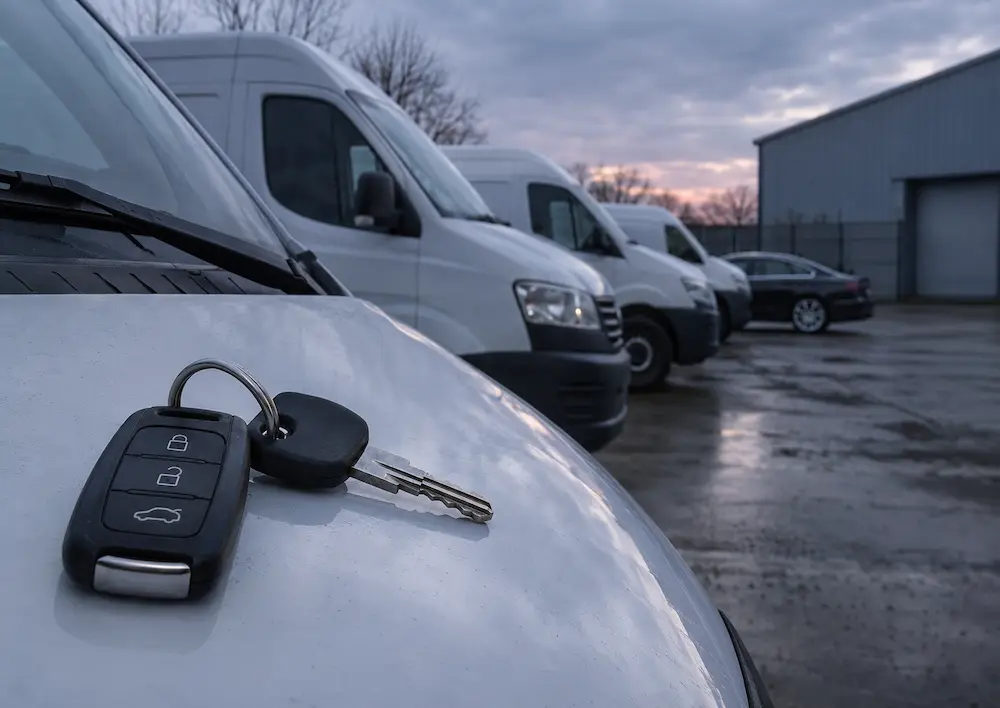
"Can I keep the van?" is one of the first questions directors ask when liquidation is on the table. For many small businesses, vehicles are the most valuable things the company uses, and they are often how the director plans to earn a living afterwards.
The answer depends almost entirely on who owns the vehicle and how it was paid for. This guide explains what happens to owned, hire purchase and leased vehicles in liquidation, what it means for you personally, and the steps to take before a liquidator is appointed.
Start with who actually owns the vehicle
Company vehicles usually fall into one of three groups, and each is treated differently in liquidation:
Before you speak to an insolvency practitioner, gather the logbooks (V5C), finance and lease agreements, settlement figures and any recent valuations. This helps the liquidator understand the position quickly and saves you time and cost. Our guide to what books and records a director must give the liquidator explains what else to have ready.
Vehicles the company owns outright
A vehicle the company owns outright is an asset that belongs to the company's creditors once a liquidator is appointed. The liquidator will take control of it, usually instruct an independent agent to value it, and sell it. The proceeds go towards the costs of the liquidation and then to creditors in the statutory order, as explained in our guide to preferential and non-preferential creditors.
You can buy a company vehicle from the liquidator, provided you pay a fair market value supported by an independent valuation. There is no automatic right to buy, and no director discount. Read more in Can I Buy My Company's Assets Back After Liquidation?
What you must not do is transfer the vehicle to yourself, a family member or a new company before the liquidation for less than it is worth. The liquidator can reverse a transaction at an undervalue, and it will be reported as part of the review of director conduct.
Vehicles on hire purchase
With hire purchase, the finance company keeps ownership until the agreement is paid off. Most agreements allow the lender to terminate when the company enters liquidation. What happens next depends on whether there is equity in the vehicle:
If you want to keep a financed vehicle, raise it early. It may be possible to settle the finance personally, or to arrange a new agreement in your name or a new company's name. This depends on the lender's credit checks and on the liquidator being satisfied that any equity has been properly paid for.
Leased vehicles and contract hire
A leased vehicle was never the company's property, so there is no equity for creditors. The leasing company will arrange collection, and any early termination charges or arrears become an unsecured claim in the liquidation.
If you need the vehicle afterwards, you can approach the leasing company about a new agreement in your own name or under a new business. That is a commercial decision for the lessor, which will normally run its own credit checks.
Equipment and other asset finance
The same principles apply to van racking and tools, plant and machinery, IT equipment and anything else on finance. Ownership decides the outcome. Owned items are realised for creditors, while financed or leased items go back to the finance company unless there is equity worth realising. A structured sale is often better than piecemeal collection, and our guide to safe asset sales for insolvent companies explains how to approach this properly.
Personal guarantees on finance agreements
Many small company finance and lease agreements are personally guaranteed by a director. If yours is, the finance company can pursue you for any shortfall, arrears or termination charges once the company cannot pay.
A personal guarantee does not disappear when the company is liquidated, although it is often possible to negotiate a settlement, particularly if you engage early. Read Will My Personal Guarantees Be Enforced If My Company Goes into Liquidation? for more detail.
What about the business premises lease?
A commercial property lease works differently from a vehicle lease. The liquidator can disclaim a lease that has become a liability, and the landlord then claims for its losses as an unsecured creditor.
If you personally guaranteed the lease, or there is a rent deposit, the landlord may look to those. Check your lease and any guarantee carefully, and mention them to your insolvency practitioner at the first meeting.
Does administration change the picture?
Yes. In administration, a statutory moratorium prevents finance companies from repossessing goods held under hire purchase without the administrator's consent or the court's permission. That breathing space can keep vehicles and equipment in use whilst a rescue or business sale is arranged.
A Creditors' Voluntary Liquidation has no equivalent protection. If the business has value worth preserving, read about company administration alongside our guide to Creditors' Voluntary Liquidation.
Practical steps for directors before liquidation
A little planning avoids most of the problems we see with vehicles in liquidation:
Speak to Parker Walsh before you make any decisions
Vehicles and finance agreements are often where directors feel most exposed, and early advice makes the biggest difference. Molly Monks F.I.P.A., our in-house Licensed Insolvency Practitioner, can review your vehicles, finance agreements and guarantees and explain the options before anything is collected or sold. Call 0161 546 8143 or book a free, confidential consultation with Molly.
FAQs
Can I keep my company car if my company goes into liquidation?
Only by buying it from the liquidator at market value if the company owns it, or by agreement with the finance or leasing company if it is financed. There is no automatic right to keep it.
Who decides what a company vehicle is worth?
The liquidator normally instructs an independent agent to value company vehicles and other assets. Any sale, including to a director, should be at or close to that valuation.
Can I take over the finance agreement in my own name?
Sometimes. It is the finance company's decision following its own checks, and any equity in the vehicle belongs to the company's creditors, so it has to be paid for.
What if the van is registered to me but the company paid for it?
The V5C shows the registered keeper, not necessarily the legal owner. The liquidator will look at who bought the vehicle and how it was paid for, so keep the paperwork that shows the true position.
Will I be personally liable for a shortfall on a leased vehicle?
Only if you signed a personal guarantee or indemnity. Otherwise, the shortfall is a claim against the company in the liquidation.

I am Molly Monks, a licensed insolvency practitioner at Parker Walsh. I have over 20 years of experience helping directors with the financial struggles they may face. I understand that it can be overwhelming and stressful, so I offer practical straightforward advice, which is also free and confidential. I spend time with directors to get a good understanding of their business and their goals, therefore providing the best tailored advice possible.
Email: molly@parkerwalsh.co.uk
Phone: 0161 546 8143
WhatsApp: 07822 012199